
Leadwork Services
Chimney Flashings
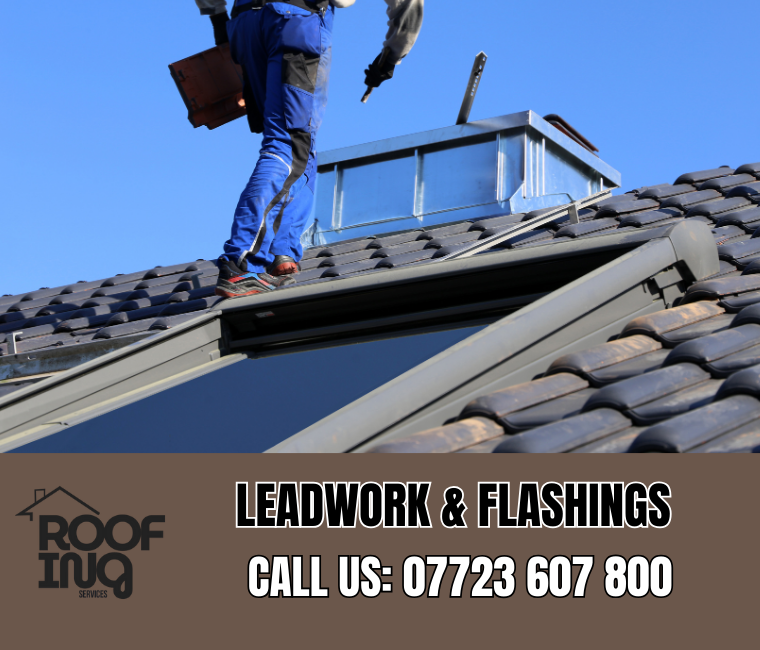
The junction between chimney and roof is sealed by lead stepped flashings, back gutters, and aprons. We install new flashings using proper techniques – correct code weight, adequate overlaps, and secure fixing into mortar joints.
Wall Flashings
Where roofs meet walls – at abutments, dormers, and lean-tos – lead flashings prevent water penetration. We install cover flashings over tile edges and stepped flashings where roofs rise against walls.
Valley Linings
Lead valleys channel water where two roof slopes meet. Traditional open valleys show the lead; modern soaker valleys sit beneath tiles. Both require skilled installation for long-term performance.
Flat Lead Roofs
Small flat roof areas – bay windows, porches, dormers – are often best covered in lead. Lead's ability to accommodate movement makes it ideal for these applications. We install sand-cast lead using traditional rolled joints.
Box Gutters
Lead-lined box gutters are found on many Bude properties, particularly terraces and larger buildings. They require careful installation and maintenance. We line and repair box gutters to current best practice.
Bossed Details
Complex shapes around pipes, corners, and awkward junctions are formed by bossing – shaping lead with specialist tools. This traditional skill creates weathertight seals that machine-made products can't match.
Lead Specifications
Code Weights
Lead comes in different thicknesses, indicated by code numbers:
- Code 3 – Thin, used for soakers and under-tiles only
- Code 4 – Standard for flashings and pitched work
- Code 5 – Heavy duty for valleys and exposed areas
- Code 6-8 – For flat roofs and demanding applications
We always use appropriate code weights – code 4 minimum for all external flashings, code 5 for valleys and exposed locations.
Sand-Cast vs Machine-Cast
Sand-cast lead has a textured surface that grips better and weathers attractively. Machine-cast (milled) lead is smoother and more uniform. Both perform well when installed correctly. We use sand-cast for visible work and milled for concealed applications.
Lead Repairs
Patching
Small holes, cracks, and splits can often be patched using lead welding or proper patch techniques. This extends the life of otherwise sound leadwork.
Dressing Down
Lifted flashings can sometimes be re-dressed into position and repointed. This is only viable if the lead is still sound – embrittled lead needs replacement.
Partial Replacement
When damage is localised, we can replace affected sections while retaining sound leadwork. Proper overlaps ensure weathertight joints between old and new.
Why Lead Fails
Thermal Movement
Lead expands significantly with temperature. Over-long pieces without proper joints fatigue and crack. We install lead in correctly sized pieces with expansion joints where needed.
Poor Installation
Lead dressed too thin, fixed incorrectly, or with inadequate overlaps fails prematurely. Proper installation follows Lead Sheet Association guidelines.
Age
Even perfect lead eventually embrittles and fails, typically after 100+ years. Victorian leadwork in Bude often needs replacement simply due to age.